

About Samuel Elikem Nyamuame

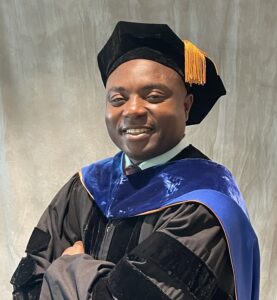
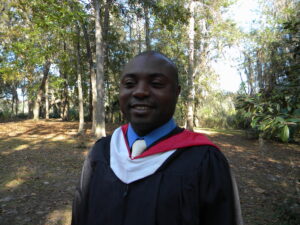
Dr. Samuel Elikem Kwame Nyamuame is an ethnomusicologist, musician, multi-instrumentalist, dancer, choreographer, and scholar specializing in African and African diaspora music, dance, and religious traditions. He is the director of the Africana Studies Undergraduate Program at Binghamton University and an Assistant Professor in the Departments of Music and Theatre.

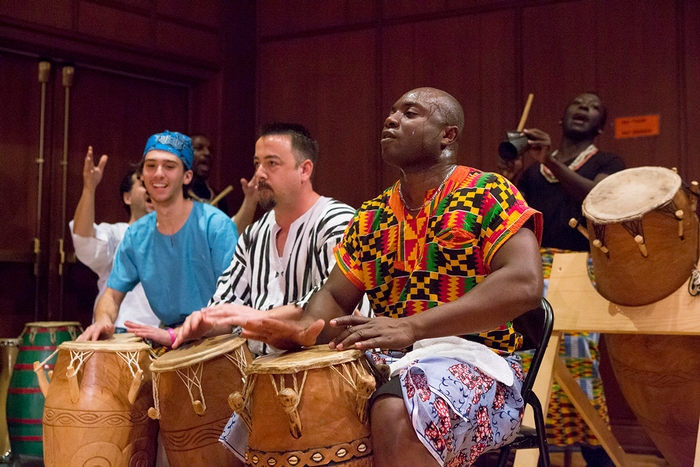
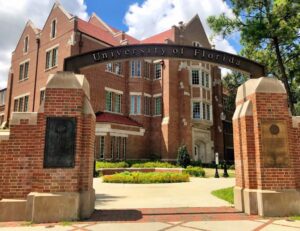
Dr. Nyamuame earned his Ph.D. in Ethnomusicology from the University of Florida, an M.A. in Ethnomusicology (World Music) from Wesleyan University, and both a BFA in Dance and Music and a Diploma in Music from the University of Ghana, Legon. His research and teaching focus on African musical cultures, particularly Ghanaian drumming and dance traditions, and the performance practices of the African diaspora. Before joining Binghamton University, Dr. Nyamuame served as an adjunct lecturer at the University of Florida, where he co-directed the Agbedidi African Ensemble, was associate director of the Pazeni Sauti Africa Choir, and worked with the Center for African Studies on community outreach programs. He has also lectured at Wesleyan University and the University of Ghana, directing and choreographing for several performance ensembles.

Dr. Nyamuame has taught and led workshops at numerous institutions, including Howard University, Mount Holyoke College, the Five Colleges of Massachusetts, University of Massachusetts Dartmouth, Western Connecticut State University, Brown University, Yale University, the University of Mississippi, and others. As a performer, he has collaborated with acclaimed artists such as Harry Belafonte, Stevie Wonder, Danny Glover, and Brazilian pandeiro master Carlinhos Pandeiro de Ouro. In addition to his artistic work, Dr. Nyamuame has presented research at regional, national, and international conferences in ethnomusicology and African studies.

A master drummer, dancer, and choreographer, Dr. Nyamuame’s scholarship explores the foundations and concepts of traditional African, especially Ghanaian, musical performance practices.

Awards and Achievements

Became Director of the Undergraduate Program for the Africana Studies Department at Binghamton University after teaching in the department since 2013 

Served as an Assistant Professor at Binghamton University for 10 years

Volta Association of New York Cultural Recognition Award

Founder & Director, Ewe Chorale of New York, New York City

Outstanding performance and dedication, CEANA (Council of Ewes Association in North America) by Novinyo Habobo of Delaware Valley, Philadelphia, PA

Exceptional Service and Performance, CEANA (Council of Ewes Association in North America) by Volta Association, Maryland MD

Dedicated Associate Choir Director- Pazeni Sauti Africa Choir, The first Africa choir at the University of Florida, Gainesville, FL

Dedicated Choir Director and Organist at the New Life Presbyterian Church of Ghana, Adenta-Madina, Ghana

Teaching Philosophy

I was born in a family of educators and I am very proud to say that my father, currently a retired Assistant Director of Education, inspired me to become a teacher. For over fifteen years of experience, I have personally come to believe that teaching is a passion and a rewarding endeavor.

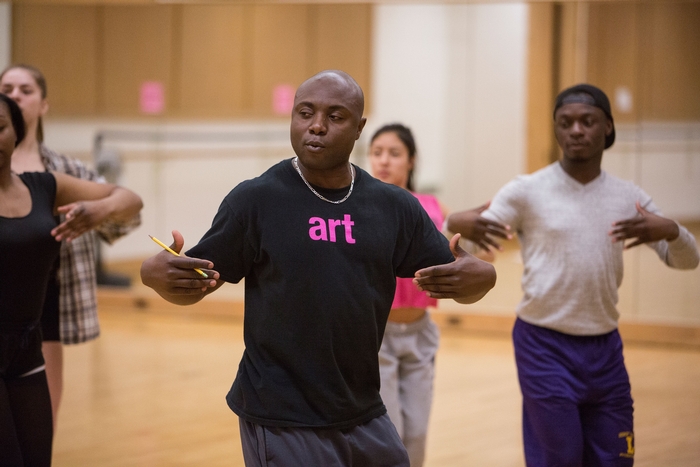
I am a experienced instructor, drummer, dancer, choreographer, multi-instrumentalist and a respected scholar in the field of Ethnomusicology with expertise in dance- music cultures of Africa and the African diaspora. As an instructor, nothing compares to the experience of helping students, participants and audiences understand the relevance and the place of the arts in our everyday lives and in our societies. I believe arts education should be a tool for personal and societal transformation. In class, my goal is to spark the students’ interest, increase student/participants understanding, and leave them with a desire to investigate more. While I do this, I demonstrate excellence, enthusiasm and consistency while having a clear impact on the knowledge and abilities of my students/participants weather in a classroom or during workshops and performances.

Throughout my teaching career, It is crucial that I create a fun, relaxing, positive and engaging learning environment for students, audience and participants both in theory, workshops
and any performance practices. Since the studio can be intimidating for a few who may not have danced before, I try to make students/participants comfortable by introducing a game to break the ice. I have participants introduce themselves to each other with a game of their choice.

My training as a local musician-performer in the village as well as training in academic settings allow me to communicate significant concepts to my students in a manner they may not
find in a textbook. When I teach drumming, I use two methods to engage students learning – leaning by rote and using western notation. My preferred method is by rote where students understand the concepts, techniques and how the instruments engage with each other, something that cannot be explained in any textbooks or notated accurately. When I teach dance, It is imperative that students/participants understand the cultural meaning of the movements, through a variety of gestures – hands, feet, facial expressions and the body among others contribute to the overall meaning of the dance. Additionally, my teaching methods sometimes explore factors like the environment, cultures, popular food, languages and movements of creatures as a technique to enhance students understanding. Strategizing fun ways to make students/participants comfortable by having fun and laughing in a class is my joy.

I teach, facilitate workshops, and perform in different countries. As a result, the participants and students I work with are diverse, representing a wide range of ethnic and cultural backgrounds from around the world. When planning my curriculum or interacting with them, I am always mindful of their unique perspectives. Students from the United States also bring varied experiences with music and dance, as well as different learning styles. I value these differences and strive to create an inclusive and engaging environment for everyone.

I deeply cherish feedback from my students and participants. I constantly seek their input to become the best instructor I can be and to continue inspiring each new generation of learners. Feedback keeps me attentive and adaptable, helping me strengthen the student–teacher relationship and ensure that every participant feels seen and supported.

Teaching Experience

Binghamton University Courses:                                                                                      AFST 188B/MUS 144B Introduction to African Drumming                                           MUSP 257 African Music Ensemble
AFST 280I/MUS 280E Popular and Traditional Music of Africa
AFST 101 Introduction to Africana Studies
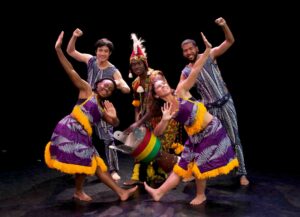
AFST 229/THEA 229 Beginning African Dance
AFST 329/THEA 329 Advanced African Dance
THEA 389D/MUS 389A African Dance Performance
AFST 280D African Popular Music and Cultures
AFST 483E/SOC 483A Music, Identity and Social Movement in Africa
THEA597 Independent Study
AFST 397 Independent Study
AFST 497 Advanced Independent Study


International Courses:                                                                                           University of Ghana, School of Performing Arts, Ghana                                      Research Method in Ethnomusicology
Interrelatedness of Music and Dance
Music for Dance
Ghanaian Instrumental Music Ensemble

Shanghai Conservatory of Music, Shanghai – China
Introduction to Ghanaian Drumming
Music in African Cultures
Interrelatedness of Music and Dance in Ghana

University of Cape Coast, Cape Coast – Ghana
Graduate Research Method
Current Issues in Ethnomusicology
Introduction to Ghanaian Drumming